

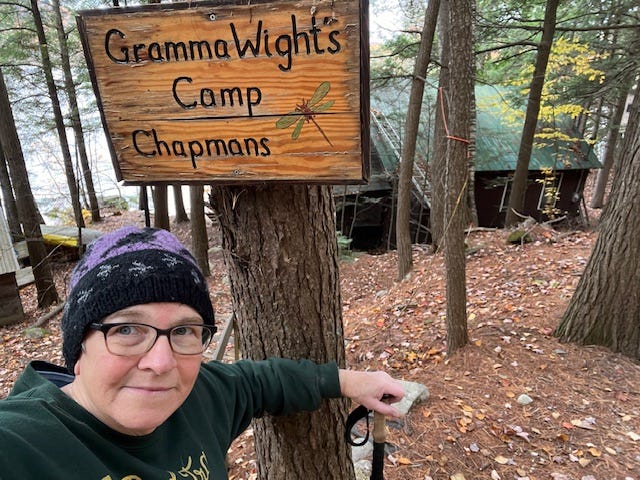
I’ve said it before: closing up our camp for the season always makes me feel melancholy. A warm fall has meant more opportunities than usual to spend time there after moving home, but when I visited last weekend I knew those opportunities were coming to an end.
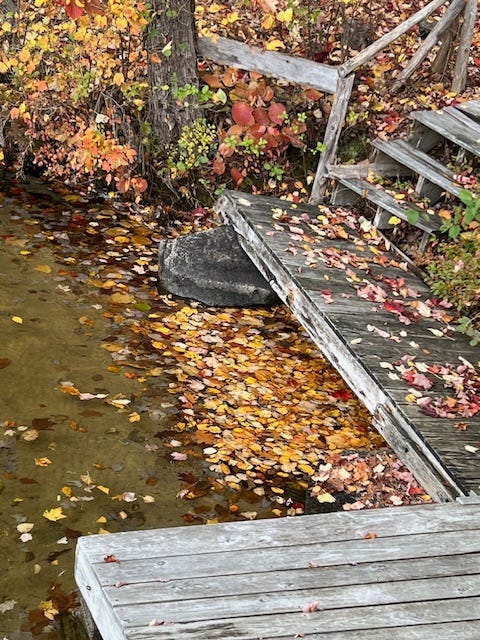
It’s October 26th, but it feels like late November as I make my way slowly down the 20 steps from the road to the door of the camp. Or maybe I’ve just been spoiled, because most of October has felt more like early September.
Just a week ago, Donna and I sat on the deck in 60-degree sunshine, my first time back at camp since my second knee replacement. When I was here on October 6th, two days before the surgery, the temperature was in the 70s and I swam for an hour, covering a mile in what I knew would be my last swim of 2025.
Today, it’s 43 degrees outside, and, when I check the indoor thermometer, I see that it’s also exactly 43 degrees inside. And why wouldn’t it be? One thin pane of glass in the windows and one layer of three-quarter-inch pine boards in the walls are all that separate outside from in, and with the shades drawn for the season, there has been no sunlight to warm the indoor air in the several weeks since we closed up and moved home.
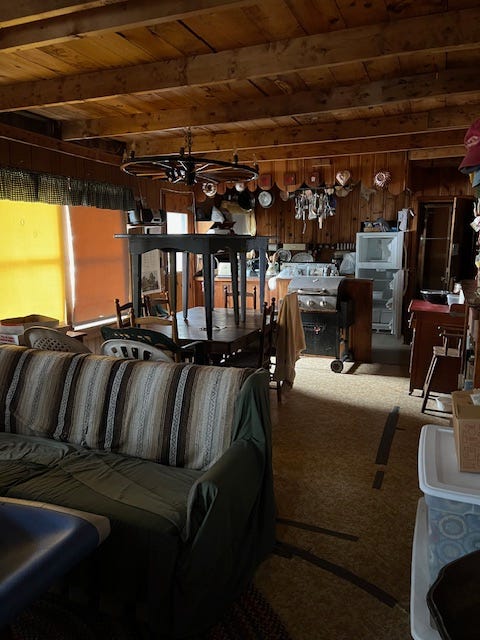
A week ago, just getting in and out of Donna’s car and down the steps to camp felt like something of an accomplishment. Since then, I’ve started driving again—yes, even my standard transmission Subaru—and I’m slowly building up my walking distance. Today, I’m planning to walk a mile and a half on the relatively flat and nearly deserted camp road.
But first, I’ve come down the steps and through the camp to the deck to take a look at the lake and, while I’m here, to put away those last two deck chairs, the grill, the pot containing the now-dead basil, the hammock. Until now, I’ve left these few things in their summer places, just in case. But today the chill in the air lets me know: we won’t need any of them again until May. Even though my head knows those seven months will fly by faster than I want them to, the finality of the act, as always, bruises my heart just a little.
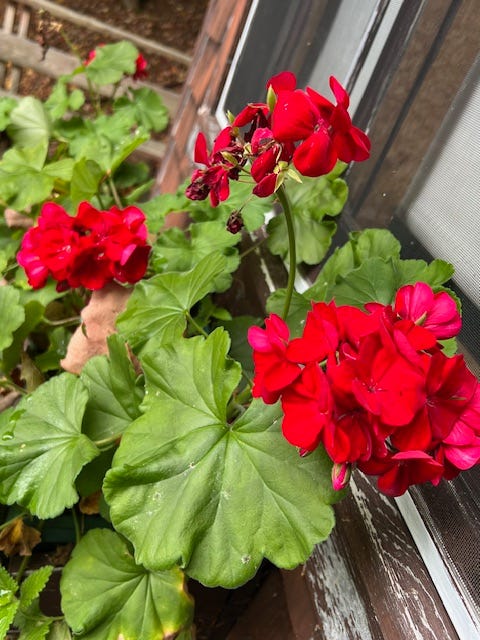
I grab my hiking poles from the car and begin my walk. Three camps further down the road, my neighbor Dan is finishing up his own closing chores, and we talk for a few minutes about the bittersweet feeling it gives us to put our camps to bed for the season, and the chilly weather that makes it, at least, easier to admit that it’s time.
Then Dan tells me that he and Mary have missed hearing Peggy’s laughter from the porch of her camp, two doors down, these past three summers, and I swallow hard and nod, because so often I still can’t trust myself to speak about her without tears.
When I pass Peggy’s camp, I think about the conversation Donna and I had a week ago, as we sat on the deck. Not for the first time, we wondered aloud what changes might be in store for us before we return to open the camp next May.
When I was much younger, if it had occurred to me to think about such things at all, it might have been to wonder if I’d have a different job by next spring, or a new car, or if I’d have lost 20 pounds and would feel better about putting on a bathing suit.
Now, I wonder who I might be missing.
When Peggy closed her camp at the end of the summer three years ago, I don’t think any of us—except, I realize now, Peggy herself—imagined that she wouldn’t be returning the following year. Not, anyway, in her physical form—to paddle her canoe past our camp as the morning mist burned away. To sit in the sun, reading on the dock throughout the afternoon hours. To take such joy in being there with her family that, on a quiet summer evening on the porch, her laughter would ring out across the still water.
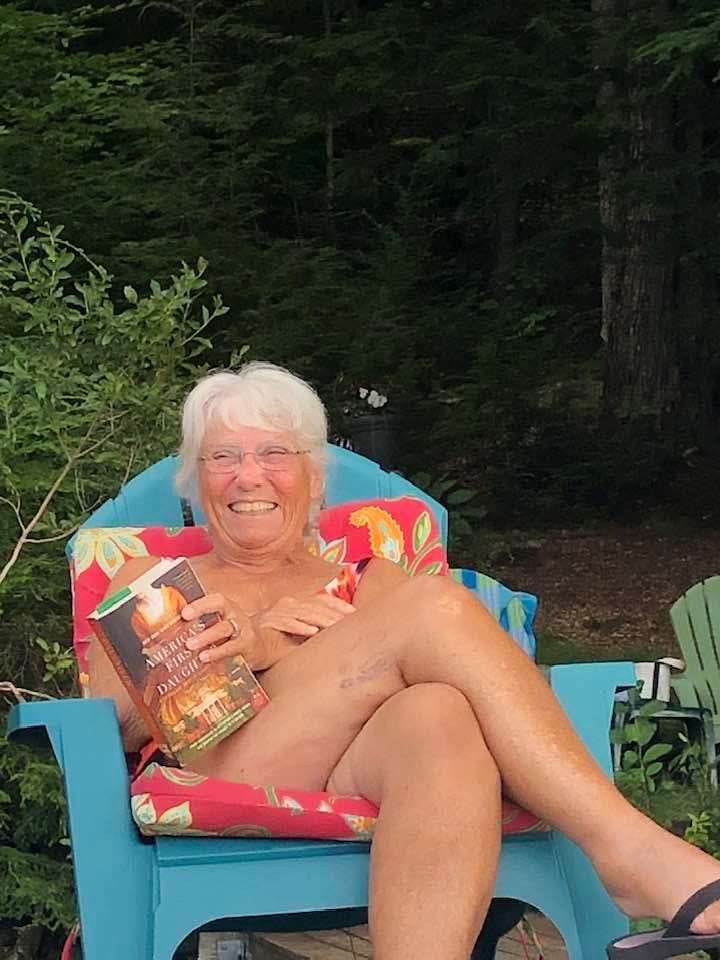
When my mother left camp for the season for the last time, 22 years ago, I believed she would have more summers, summers when I wouldn’t be quite so busy, when I would find more opportunities to spend an afternoon, or a weekend, or a week there with her.
I always thought there would be more time.
Now that we are older, when we talk about what may have changed in our lives by next year, Donna and I both know exactly what we mean.
Her parents are 90 and 92; her partner is 84.
My siblings are between ten and 15 years older than I am.
And my husband, at 78, is waiting to have the scary-sounding results of last week’s biopsy explained to him by his doctor.
No matter what changes are coming, and when, I know that when they happen, I’ll still be thinking the same thing: I always thought there would be more time.
It was very touching to hear you read in class, and, if possible, even more moving to read along with the pictures.
Amy, you are truly a “big hearted” person. You have a way of making people in your life feel special, and after reading this essay I’m reminded of how you do that. You genuinely do feel everyone is important. I feel lucky to call you a friend. ❤️