

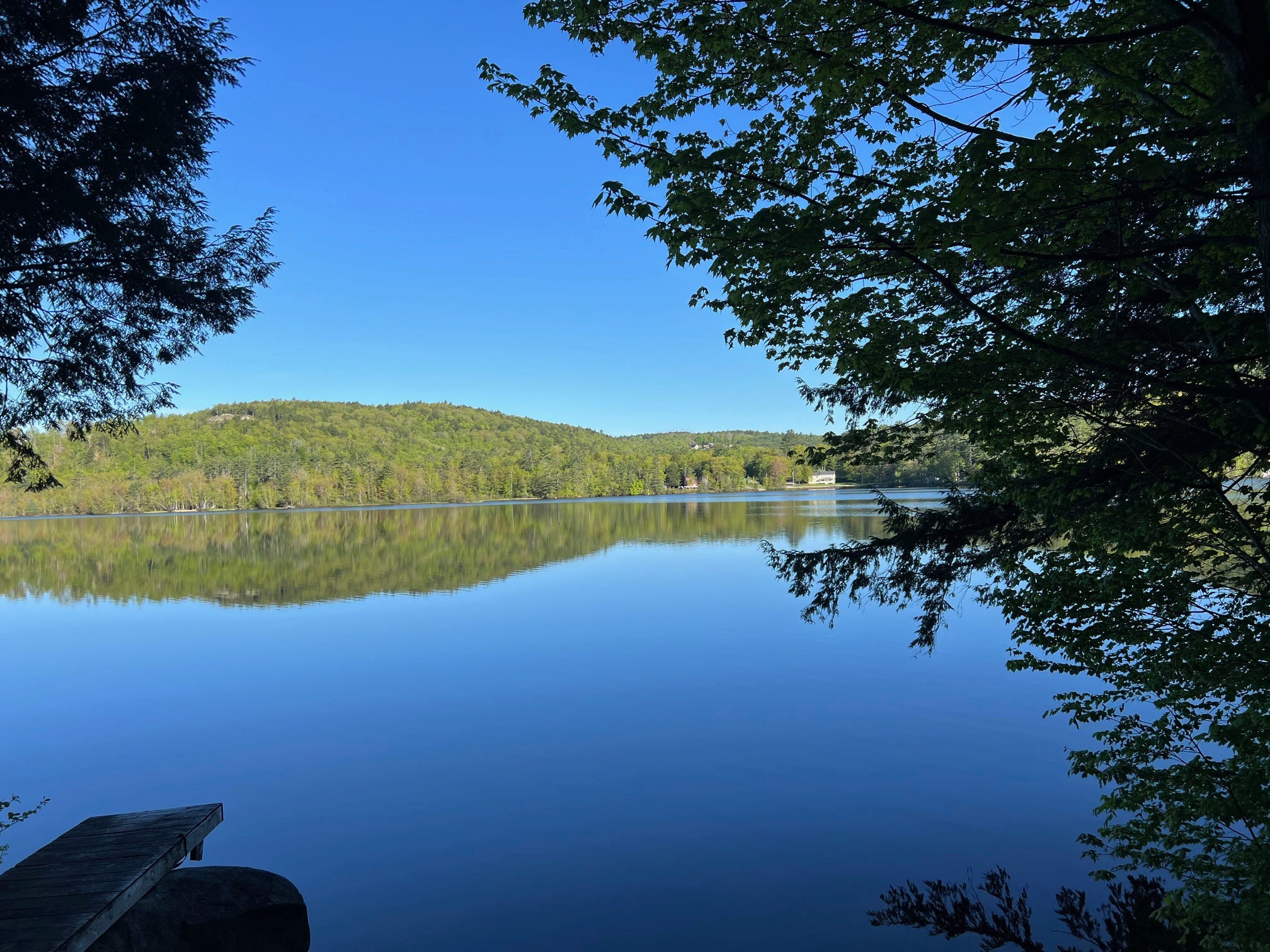
When I’m asked why I’ve never considered living anywhere but in New England, one of the reasons I cite is that we have four seasons. I suppose people in many other parts of the country also believe that they have four seasons, but I don’t think it’s the same.
New England—specifically, northern New England—is the best place to experience the dramatic changes that occur four times each year, and the New England lexicon has evolved to include weather words that everyone here recognizes and understands.
When we hear the word “crisp” used to describe a cool fall day, we all know exactly how the air feels on our skin, how it cleanses our noses and lungs when we take a deep breath. Where else do people talk about being able to smell the coming snow, or about the “bluebird day” that often follows a winter storm? Would people in other places know what we mean when we remark on how the air suddenly feels “soft” on the first day of real springlike weather?
Each turn of the seasons brings its own kind of promise. Just as we start to tire of the heat, along comes the fall, scouring out the cobwebs, leading us to think clearly and make all sorts of ambitious plans. Fall is filled with projects and harvest celebrations and, often, a lot of social contact; by the time we’re ready for a long metaphorical rest, winter descends, right on cue, giving us permission to hunker down and make soup. Then spring—who could deny the heady promise of spring, when trees are budding, green shoots are pushing up through the recently thawed earth, and everything is new again?
For me, though, it will always be summer that holds the most magical promise. From my earliest memories of packing the car for the long trip to Maine from Connecticut, usually the day after school let out, to the excitement I still feel each year in May as I count down the days to “camp opening weekend,” summer has always brought a kind of life so different from the one I live during the rest of the year that I might as well be a different person entirely.
Whether I’ve been preparing to travel three hundred miles to get to camp, as I did for my first eighteen summers, or three miles, as I have for the last thirty-six, summer has always meant being here on North Pond, the place I call “the center of my universe.” It has meant waking up early to see what kind of day it is, hoping for blue skies and warm sun, but firmly believing that a chilly, rainy day at camp—a day to keep a fire going in the woodstove and curl up with a book—is still better than a sunny day anywhere else.
Summer at camp means thinking about projects: my parents and siblings started building the camp in 1955, but four decades later my mother was still telling visitors that “it wasn’t finished yet.” The steep, narrow stairs to the loft, she explained, were built “to get by with until we could build a real staircase” and the reason most of the windows don’t open is that they are old wooden storms, picked up cheap and fixed in place “until we could afford real windows.”
In the years after my father died, my mother completed a number of camp projects on her own, or with the help of my older siblings. Some of these, like the flush toilet she singlehandedly installed in one marathon session to replace the old outhouse, or the screened porch that was added in the sixties, are, inarguably, real improvements. I’m less sure about others, like the flimsy, dark 1970s paneling and the homasote board ceilings my mother thought gave the place “a more finished look.”
Nowadays, we do more thinking about new projects than we do actual execution of them, because another constant of summers at camp is a sense of freedom and a lessening of responsibilities. For my mother, a school librarian who raced to camp each summer after nine months of teaching, that freedom meant time to do projects. For me, working at a job that is busier in the summer than it is the rest of the year, the formula is a bit skewed. I’m more likely to tackle a project at home in the winter, and to jealously guard my time at camp—to think better of that long-planned linoleum replacement project, opting instead for a swim, a paddle, or a nap on the deck.
No matter what kind of upheaval the rest of my life has been in, no matter what kind of weather we’ve had, and no matter how I’ve chosen to spend my time at camp, every summer here has offered something unexpected, each one has been different from all of the others, and every single one has been a gift.
When, just as my mother did every morning for fifty summers, I rise early at camp and look out at the lake to see if it is steaming, or choppy, or smooth—if the surface is, as she always said, “just like glass”—I never cease to be grateful, or to marvel at the promise that each day here holds.
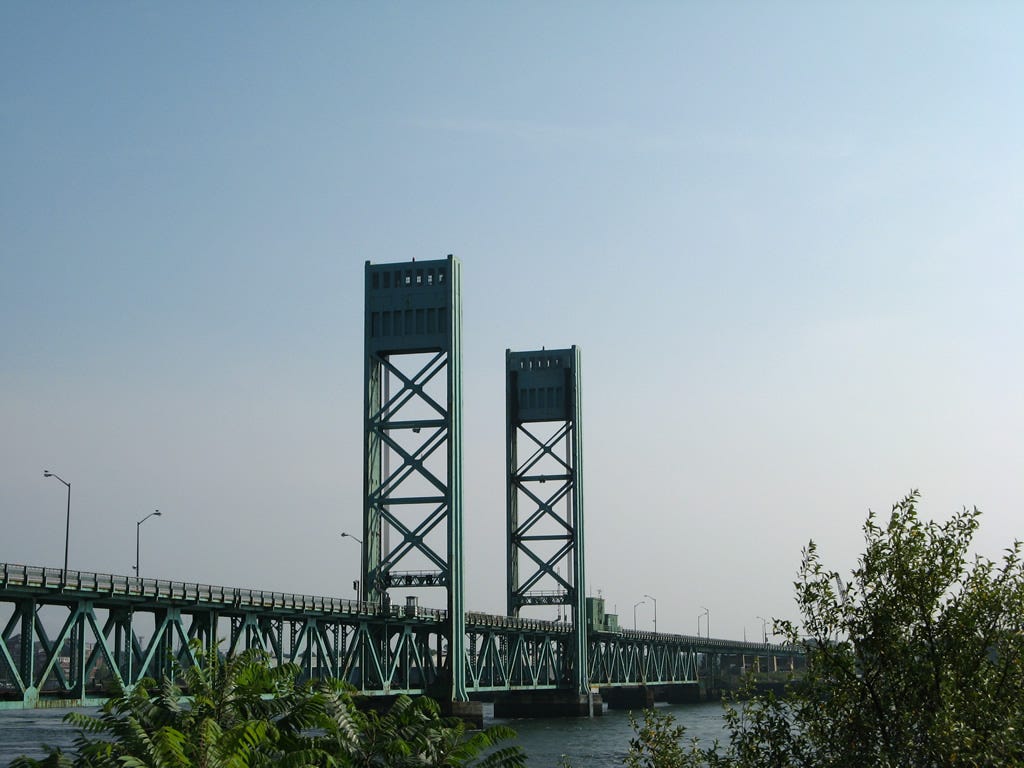
As I imagine my mother felt each year as she crossed the Kittery bridge on the way to camp for the summer, and as I wrote for the ending of my book, Just Like Glass—which is, really, Mom’s book:
“The camp—our camp, Bill’s camp—is waiting for us, with windows to be thrown open, blankets to air, and a winter’s accumulation of cobwebs and mouse droppings to be swept away. The summer stretches before us, shimmering and indistinct, like the highway in the sun.”
Ah, there's the beautiful extension of your book that I needed when I was all done reading it and felt melancholy that it was over.
We traveled a similar route from New Jersey along the Merritt Parkway that still had $.10 tolls and over the bridge “welcome to Maine.” my most treasuredmemories are triggered by your essays, and I am so grateful..Bona Hayes