

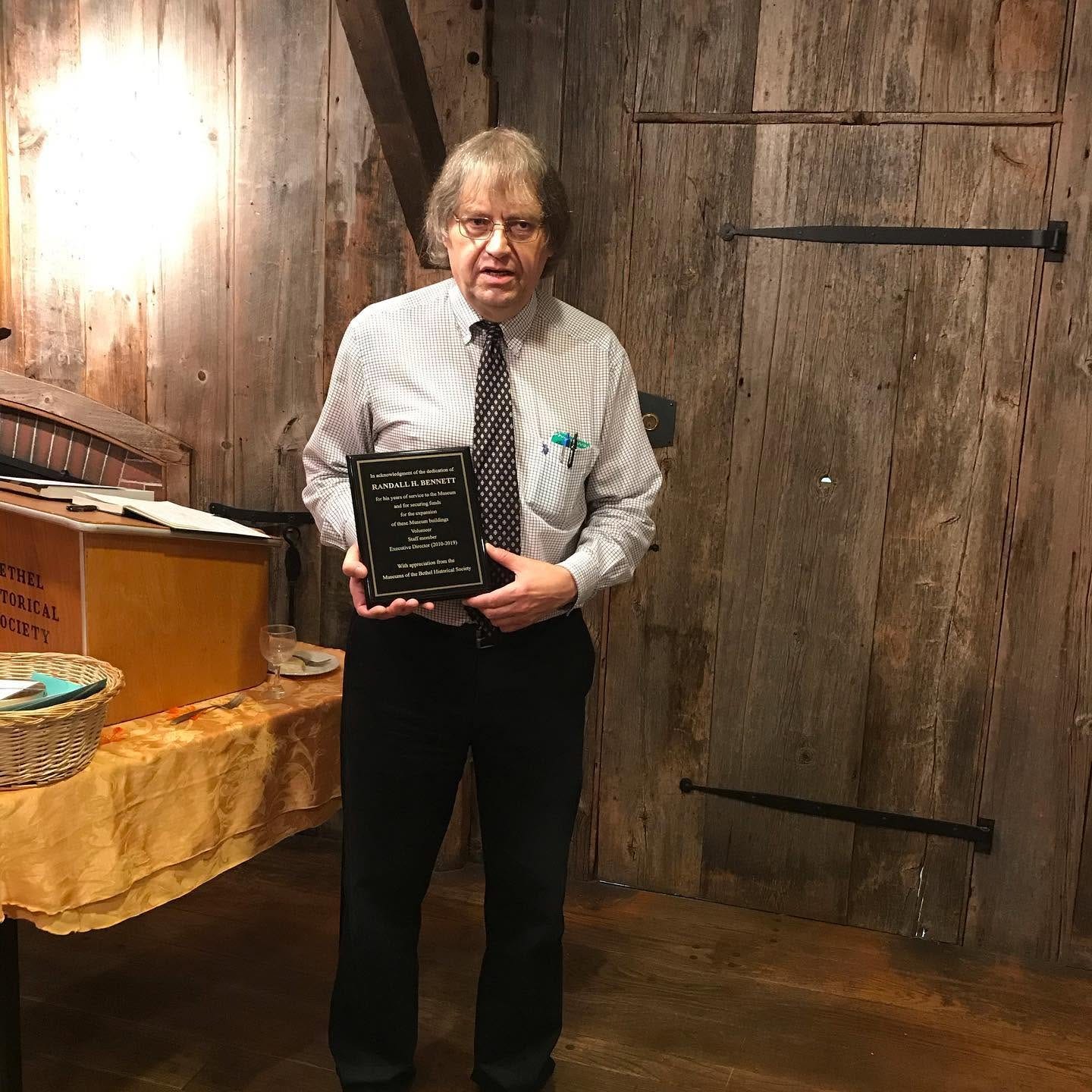
With the passing last week of Museums of the Bethel Historical Society Executive Director Emeritus Randall H. Bennett, our community has lost not only a walking repository of local history, but an engaging storyteller and a kind and generous neighbor and friend. His association with MBHS extended to more than a half-century, and he was an invaluable resource to the current staff. Largely self-taught, he was an expert in New England architecture, White Mountain art and history, genealogical research, and much more.
I learned so much from Randy over the years. I will sorely miss his quick wit, his encyclopedic knowledge of local history and genealogy, and his kindness.
Details regarding services and memorial arrangements will be announced when they are finalized.
It’s hard for me to believe that school started in MSAD #44 this week! I don’t know how the summer flew by so quickly. It still seems wrong to me for the kids to be back in school before Labor Day.
I remember my own childhood summers, when Labor Day weekend was always the time when we closed up camp for the year. We waited until the last possible day to drag ourselves away from North Pond and head back to Connecticut for the long school year, reluctantly hitting the road in the family station wagon on the morning of Labor Day so that my mom, a school librarian, could start school on Tuesday.
We kids had one more day of freedom—not nearly long enough to adjust to the culture shock of being back in suburbia, far from our beloved camp—before we had to actually put on shoes (often, in my case, for the first time in weeks) and become prisoners of the classroom for nine long months.
We may have a bit more than three more weeks left of astronomical summer, but meteorological summer begins next Tuesday, September 1, and I’ve already started to see hints of red and orange among the hardwood trees.
Here’s a crash course in the difference between astronomical and meteorological summer from the website of the National Oceanic and Atmospheric Administration (NOAA) website:
You may have noticed that meteorologists and climatologists define seasons differently from “regular” or astronomical spring, summer, fall, and winter. So, why do meteorological and astronomical seasons begin and end on different dates? In short, it’s because the astronomical seasons are based on the position of Earth in relation to the sun, whereas the meteorological seasons are based on the annual temperature cycle.
The Astronomical Seasons
People have used observable periodic natural phenomena to mark time for thousands of years. The natural rotation of Earth around the sun forms the basis for the astronomical calendar, in which we define seasons with two solstices and two equinoxes. Earth’s tilt and the sun’s alignment over the equator determine both the solstices and equinoxes.
The equinoxes mark the times when the sun passes directly above the equator. In the Northern Hemisphere, the summer solstice falls on or around June 21, the winter solstice on or around December 22, the vernal or spring equinox on or around March 21, and the autumnal equinox on or around September 22. These seasons are reversed but begin on the same dates in the Southern Hemisphere.
Because Earth actually travels around the sun in 365.24 days, an extra day is needed every fourth year, creating what we know as Leap Year. This also causes the exact date of the solstices and equinoxes to vary. Additionally, the elliptical shape of Earth’s orbit around the sun causes the lengths of the astronomical seasons to vary between 89 and 93 days. These variations in season length and start date would make it very difficult to consistently compare climatological statistics for a particular season from one year to the next. Thus, the meteorological seasons were born.
The Meteorological Seasons
Meteorologists and climatologists break the seasons down into groupings of three months based on the annual temperature cycle as well as our calendar. We generally think of winter as the coldest time of the year and summer as the warmest time of the year, with spring and fall being the transition seasons, and that is what the meteorological seasons are based on. Meteorological spring in the Northern Hemisphere includes March, April, and May; meteorological summer includes June, July, and August; meteorological fall includes September, October, and November; and meteorological winter includes December, January, and February.
Meteorological observing and forecasting led to the creation of these seasons, and they are more closely tied to our monthly civil calendar than the astronomical seasons are. The length of the meteorological seasons is also more consistent, ranging from 90 days for winter of a non-leap year to 92 days for spring and summer. By following the civil calendar and having less variation in season length and start, it becomes much easier to calculate seasonal statistics from the monthly statistics, both of which are very useful for agriculture, commerce, and a variety of other purposes.
No matter which calendar you prefer, there are plenty of upcoming events in our area to take you from summer to fall:
Thursday, August 27, at 1:00 p.m. at the Museums of the Bethel Historical Society’s Twitchell Education Building: Charcoal Drawing with Sara Hemeon, the final program in this year’s Mill Brook Craft Series. Discover the expressive beauty of charcoal drawing in this beginner-friendly class. Sara will provide a brief history of charcoal as an artistic medium, as well as instruction in fundamental techniques. No drawing experience needed, and the program is free and open to the public.
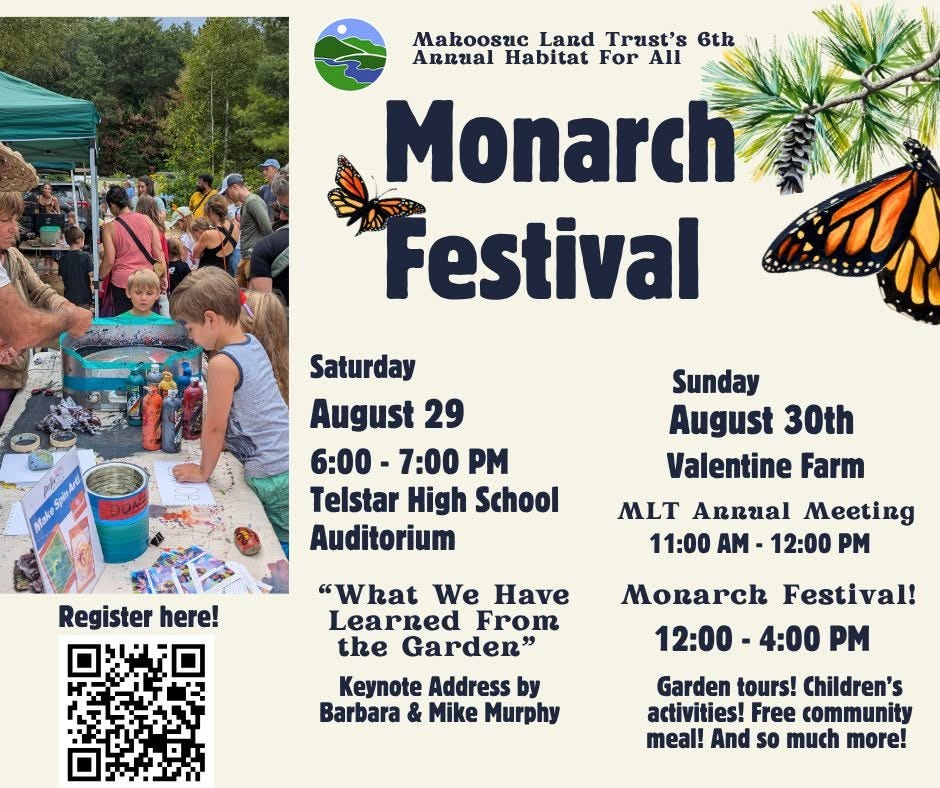
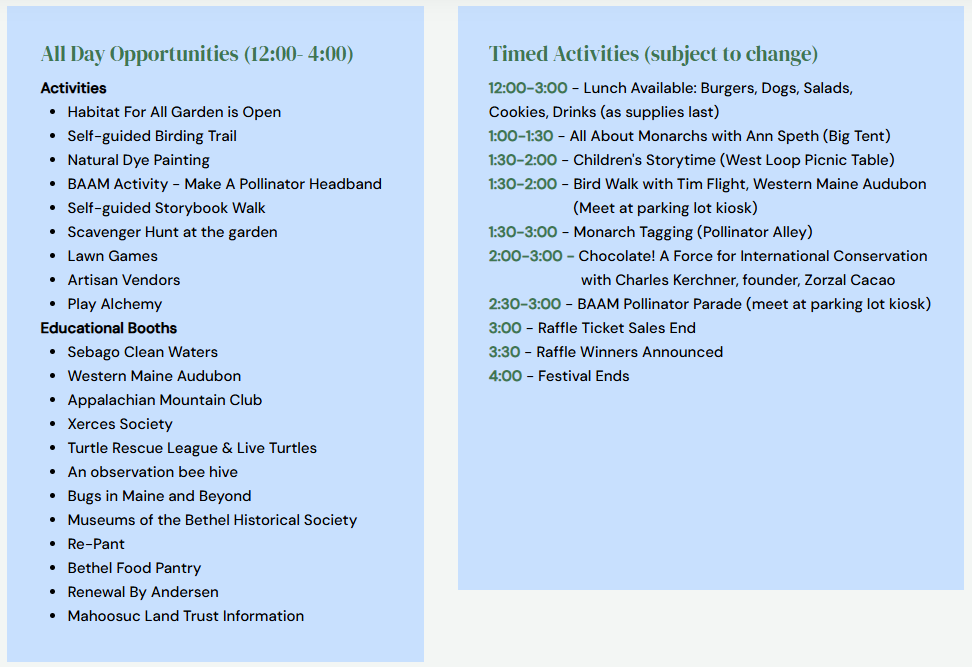
Saturday, August 29, from 6-7 p.m. at the Telstar High School Auditorium and Sunday, August 30, from 12-4 p.m. at Valentine Farm, 162 North Road, Bethel: The Mahoosuc Land Trust’s 2026 Monarch Festival. See detailed information and full schedule below. The festival is free, but registration is encouraged: www.mahoosuc.org/monarch-festival
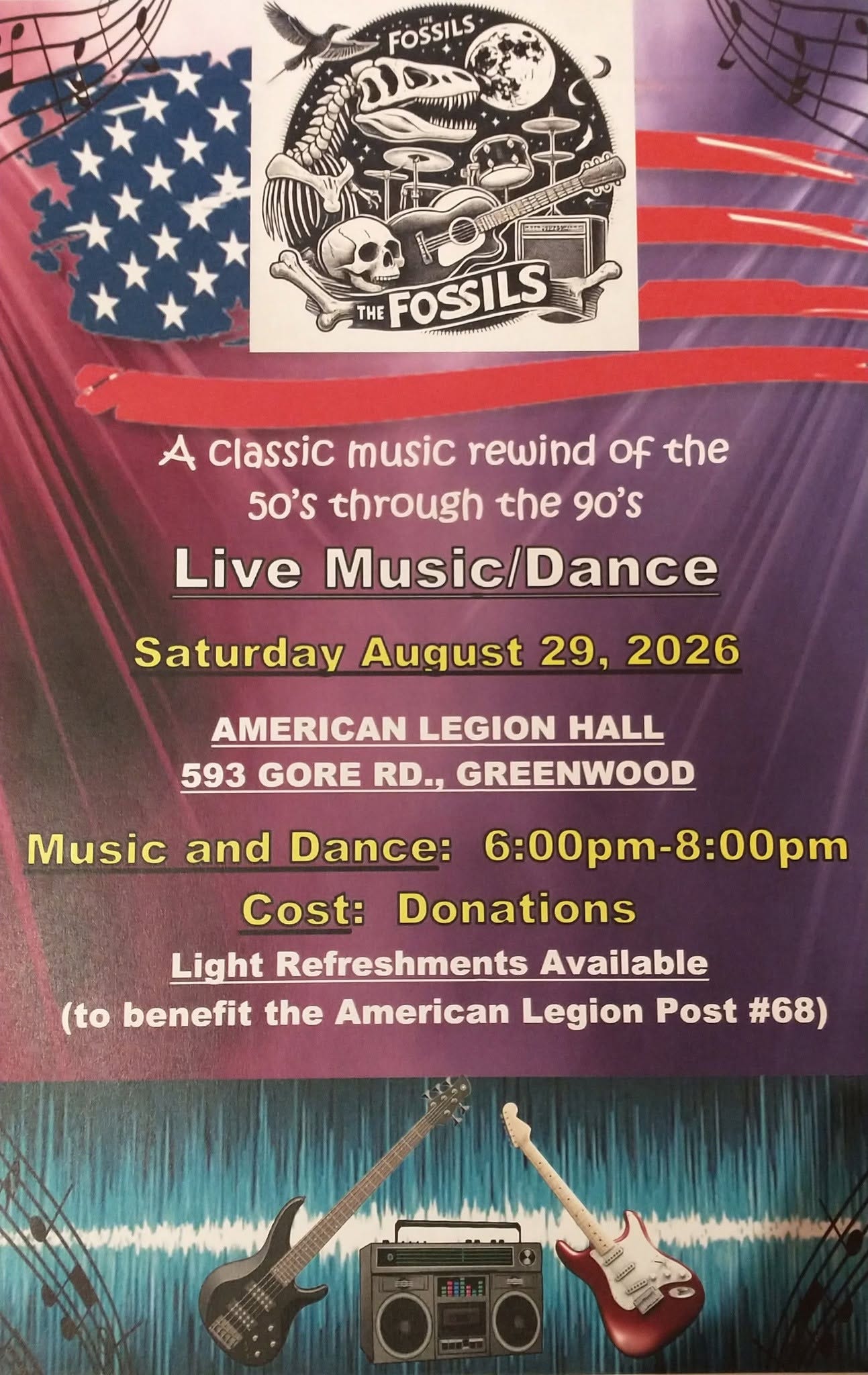
Saturday, August 29, from 6-8 p.m. at the Locke’s Mills Legion Hall on the Gore Road: Listen and dance to The Fossils. From the band: “We’ll have pizza, hotdogs, chips, popcorn, soda, and water for sale. Come shake a leg or sit and listen - we love watching all of you have a great time!”
Sunday, August 30, at 2:00 p.m. at the West Paris Public Library, 226 Main Street, West Paris: Concert by the Tourmaline Brass Quintet. TBQ is a new group composed of seasoned musicians from five area communities: trumpet players Marc Eckels of Paris Hill and Julie Schubert-Cowan of Bethel, trombonist Jim Bennett of West Paris, French horn player Kelly Bickford of Greenwood, and tuba player Tom DeLuca of Hanover. If the weather cooperates, the concert will be held on the lawn behind the library; in case of rain, it will be held inside the library. Admission for the one-hour concert is free, and children and families are welcome!
Wednesday, September 2, at 7:00 p.m. at the Locke’s Mills Legion Hall on the Gore Road: Greenwood Historical Society program featuring the history of the Howe Hill neighborhood. The newest in the series of the “Greenwood neighborhood” books by the late Blaine Mills features the Howe Hill neighborhood and will be available to purchase.
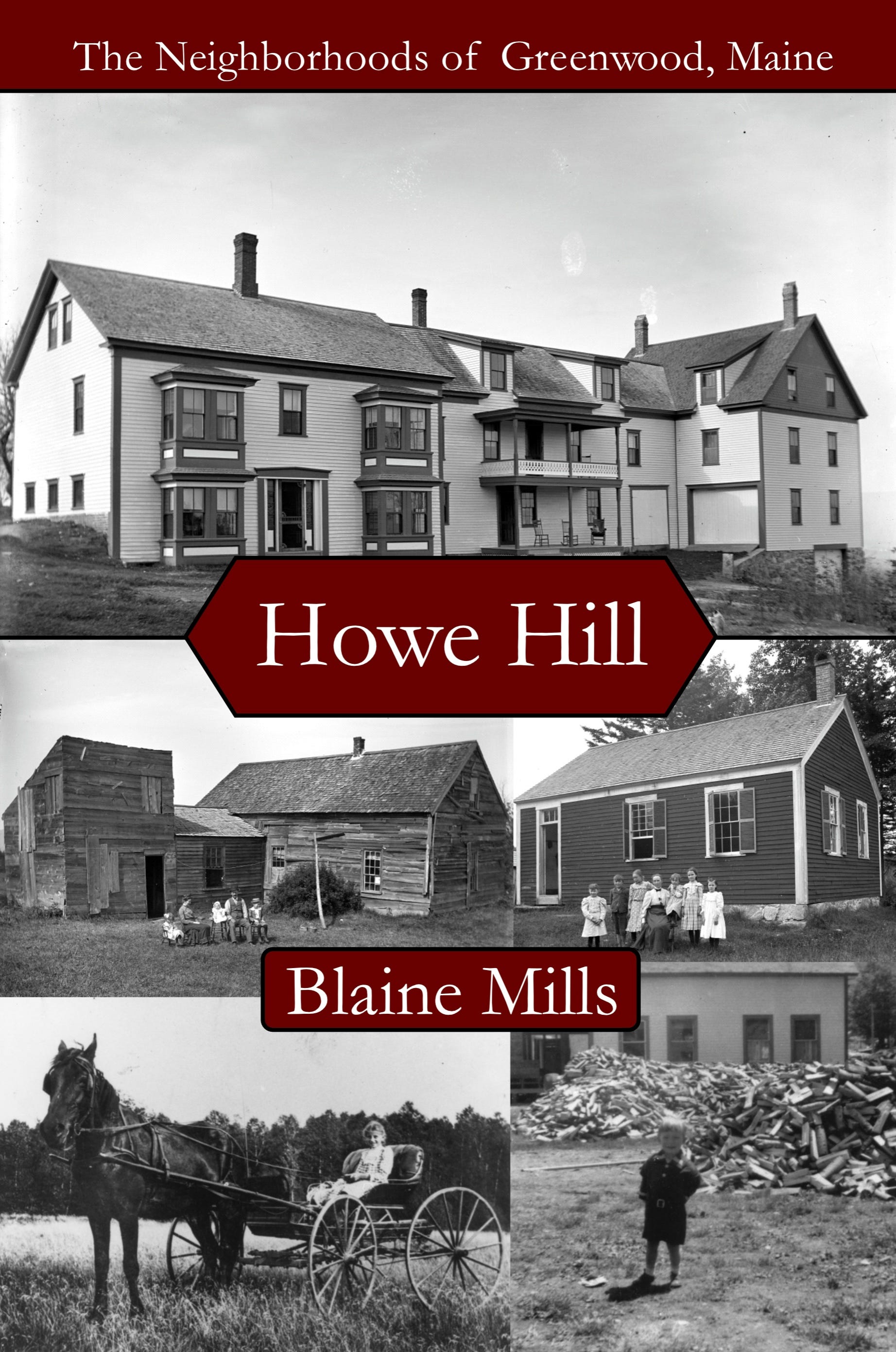
Thursday, September 3, from 5:30-7:30 p.m. at the Museums of the Bethel Historical Society’s Mason House, 10 Broad Street, Bethel: Annual potluck supper and meeting, featuring “Meet John Adams: A Lively and Revolutionary Conversation with America’s Second President,” with George Baker. Potluck supper at 5:30, followed by the program. All are welcome!
Saturday, September 12, at 1:00 p.m. at the former UU Church on Grove Street in Bryant Pond: Jane Chandler will share the recent history of Buck’s Ledge for the Woodstock Historical Society. The slide show will depict the people who helped to make Buck’s Ledge Community Forest a reality, forever preserved for the public.
Saturday, September 12, at 2:00 p.m. at the Waterford Public Library: Book discussion of The Radicalism of the American Revolution. Prize-winning historian Gordon S. Wood offers a grand and immensely readable synthesis of historical, political, cultural, and economic analysis to describe the events that made the American Revolution. Wood depicts a revolution that was about much more than a break from England–rather it transformed an almost feudal society into a democratic one, whose emerging realities sometimes baffled and disappointed its founding fathers. This is the fourth in a series of book discussions sponsored by the Museums of the Bethel Historical Society and the Independence 250 committee to commemorate America’s 250thbirthday. The book is available at the MBHS Museum Shop.
Lena has recovered quickly from what vets think was probably a bacterial infection that had caused dozens of itchy bumps, which she scratched into hot spots, on one side of her face. Tony and I first thought they were insect bites, but we learned that her playmate Maybelle, with whom she had romped in the pond a couple of days before, had come down with the same symptoms. Maybelle’s vet’s first question was whether she had been swimming in a lake or pond, and he was certain it was caused by some kind of bacteria.
In any case, Lena is fully healed and her fur grew back quickly, so she’s once again stunningly beautiful, if not perfectly behaved.
I don’t like to think that there was some strange kind of bacteria floating around in my beloved North Pond, but if there was, it seems to have been temporary. Lena’s been back in the pond this week, our neighbors’ dogs swam after her “episode,” I’ve been swimming almost every day, and (thankfully) none of us have suffered any ill effects.
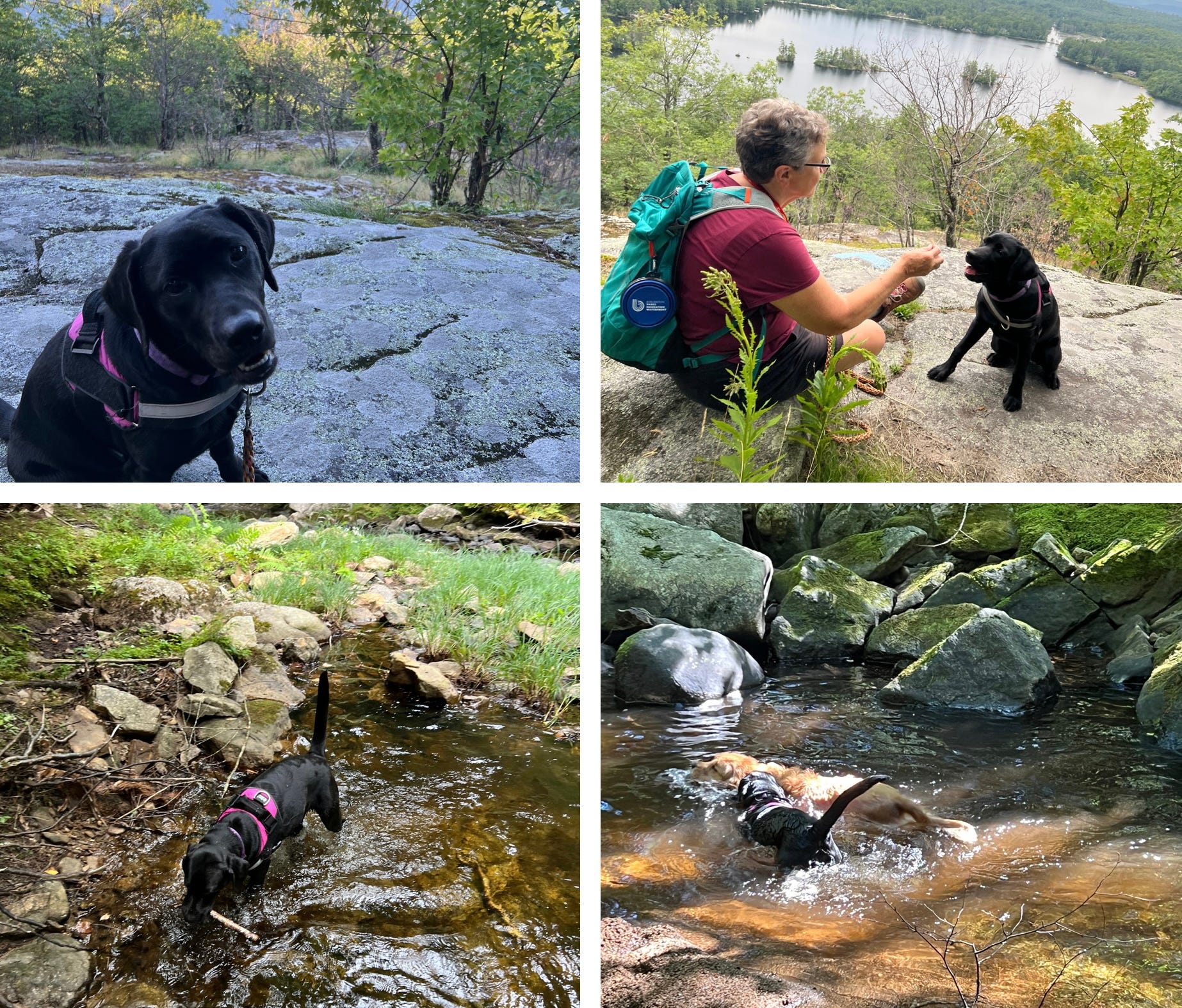
We’ve been going for lots of short hikes, and Lena now gets excited when she hears the word “hike,” although not quite as excited as she gets when she hears me say we’re going to see her friend Puck. The most exciting thing of all is when she gets to go for a hike WITH Puck, and if the hike includes places to play in the water, that makes it even better.
This week’s hikes included two to Buck’s Ledge, one on the Sanborn River Trail, and one to an “undisclosed location” with Puck and Betsey.
If you haven't yet checked out the Western Maine Neighborhood News, published weekly online by the Museums of the Bethel Historical Society (and edited by me 🙂), now is a good time to do so, as—this week only—columns by all of the town correspondents are free to all readers. Visit WMNN.org to read or subscribe to a free or paid subscription to receive the newsletter by email each Thursday morning. This online newsletter is intended to keep our communities informed, and to continue the tradition of weekly town columns that was in danger of being lost when the Bethel Citizen eliminated them last year. As always, if you have news, events, or photos you’d like to have included here, I hope you’ll share them with me! You can reach me by email at amy.w.chapman@gmail.com or by phone or text at 207-890-4812.
“August used to be a sad month for me. As the days went on, the thought of school starting weighed heavily upon my young frame.” ― Henry Rollins